
Getting Repeated No Caller ID Calls? Here's What's Really Going On


 4 min. read
  Published on
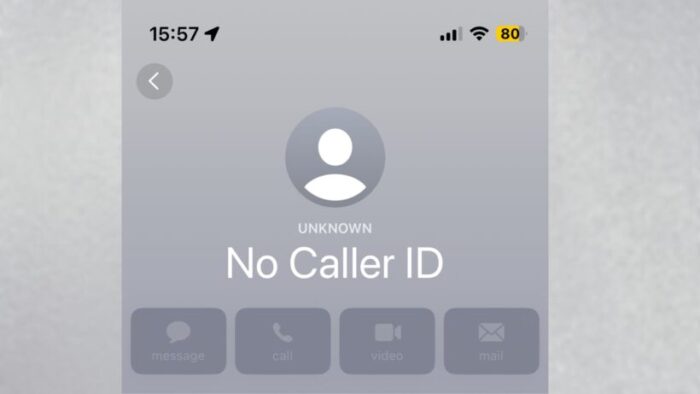
No Caller ID number calls are increasing because the barrier to making anonymous calls has collapsed. VoIP apps, carrier-level suppression codes, and call masking services now allow anyone to hide their number before dialing, and the phone numbers they are calling were almost certainly harvested from data broker sites where your name, number, and address sit publicly indexed.
The surge is not random. It follows a documented pipeline from public data exposure to targeted anonymous contact.
How Caller ID Gets Hidden in the First Place
A hidden caller identity is rarely a glitch. Phone networks are designed to allow outgoing masking, and bad actors exploit three primary channels to switch off their visibility:
- The 67 Prefix Code: A vertical service code dialed before a phone number signals the cellular network to drop outgoing caller details for that single session.
- VoIP-Level Suppression: Voice over IP services process calls through internet routing rather than traditional copper lines or cellular towers, which lets callers strip identifying data completely or substitute arbitrary details.
- Carrier Account Settings: Most mobile providers offer permanent account-level settings that suppress caller ID on all outgoing calls.
VoIP technology drives today’s massive volume of unwanted contacts. Because web-based diallers route calls across software servers, automated scripts can spin up thousands of concurrent connections for pennies, injecting custom metadata into the call header or leaving the identity fields empty entirely.
There is also a distinct line between a No Caller ID signal and an Unknown Caller tag. A No Caller ID call arrives because the sender deliberately wiped their identity. An Unknown Caller flag appears when network handoffs fail, such as an international call traversing an unverified carrier switch that drops incoming tracking flags
Where Your Phone Number Actually Comes From
The callers hiding behind blank screens do not guess ten-digit combinations at random. They purchase or scrape structured records.
- Public Record Aggregation: Property transfers, voter rolls, business filings, and court documents continuously feed contact details into open state databases.
- App Data Harvesting: Free mobile apps frequently request contact permissions, and some sell scraped address books directly to third-party data brokers.
- Breach Collections: Security leaks across retail sites and account portals expose phone numbers, which are then merged with existing voter and credit profiles.
This pipeline fuels automated scraping tools. A phone number listed on a standard people-search directory is instantly accessible to anyone operating an automated dialing setup. The volume of anonymous contacts hitting a device correlates directly with how many data broker databases hold that person’s entry.
Why Some Calls Use Your Name
When an anonymous caller greets a person by name, it changes the context instantly. A target who hears their own name, employer, or neighborhood immediately searches for a reason to trust the conversation.
Scammers leverage data broker profiles to run targeted spear-vishing attacks. By pairing a phone entry with workplace details or a local zip code, bad actors build quick credibility before disclosing why they called. Hearing personal information creates a false sense of security that generic spam scripts never achieve. Automated tools assemble thousands of these custom profiles in seconds, feeding name-and-number pairs directly into live call queues.
What Your Phone Can Actually Do About It
Smartphone makers now ship call filtering as a standard feature. Most modern devices can silence calls from numbers that are not saved in contacts or recently dialed, sending them straight to voicemail, and some offer automated screening that answers a call and checks the caller’s intent before the phone ever rings. Mobile carriers add a network layer on top of this, flagging likely spam before a call is connected.
These filters come with a familiar tradeoff. The same setting that mutes an anonymous scammer also mutes a delivery driver, a doctor’s office, or a contractor calling from an unsaved number, which is why many people try silencing features for a week and then turn them off again.
The bigger limitation is structural: device filtering is a downstream fix. It shuts the noise out, but the data leak feeding the diallers remains wide open.
The Actual Fix Is Upstream
Local settings only manage the symptoms of exposure. A phone configured to silence unknown callers will keep receiving silent calls for as long as its owner’s details are published across public directory brokers.
Addressing the root problem means removing personal entries from major people-search sites, which breaks the dataset pipelines that feed automated dialing lists. Data brokers regularly re-scrape open web records, so old profiles can re-emerge over time if left unmonitored.
Anonymous calls are fundamentally a privacy issue rather than a telecom bug. Muting the ringer takes five seconds, but scrubbing personal data at the source is what stops the calls from arriving in the first place.


Read our disclosure page to find out how can you help MSPoweruser sustain the editorial team Read more



Improve this guide



User forum
0 messages