
Best AI Aggregators: Stop Paying for Multiple Subscriptions


 8 min. read
  Published on
There are many exceptional AI models out there, but they often have different strengths. One might excel at writing, while another is better at research or image generation. Subscribing to every leading AI service can quickly become expensive, not to mention inconvenient.
That’s where AI aggregators come in. Instead of paying for multiple subscriptions, these platforms bring several models together under one roof, often through a single subscription or pay-as-you-go plan. You can switch between models depending on the task, giving you access to their different benefits without paying for each one individually.
6 Best AI Aggregators for Streamlining Your Daily Workflow
In this guide, I narrowed down the 6 best AI aggregators and what makes each of them stand out.
1. Lorka AI – Best All-in-One AI Platform
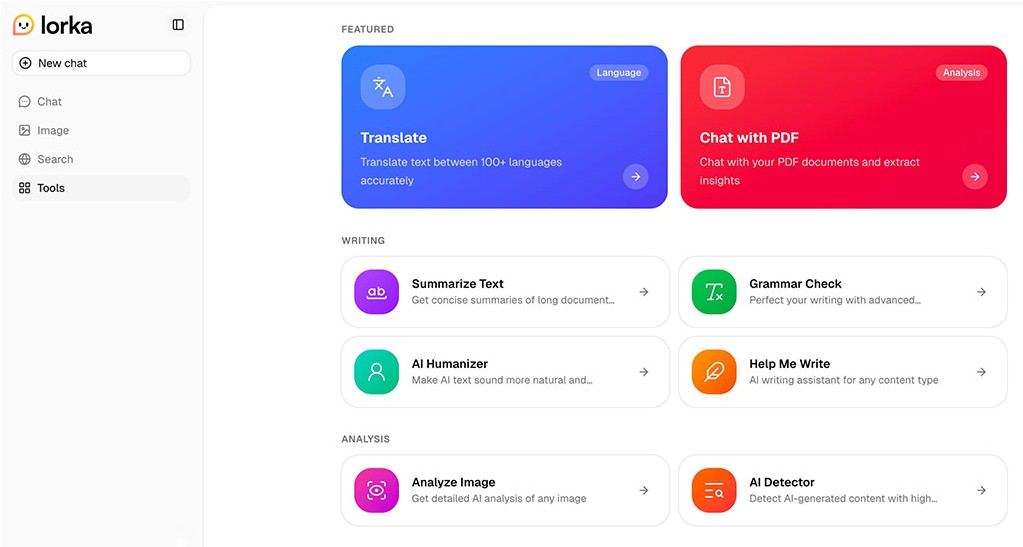
Lorka AI takes the hassle out of juggling multiple AI subscriptions by bringing leading models together under one workspace. GPT-5, Claude, DeepSeek, Gemini, Grok, and Perplexity, can all be utilized through a convenient selection of tools. This means you don’t always need to work out the right prompt or application yourself.
For example, its Chat With PDF tool is particularly useful, letting you upload documents and extract information, answer questions, and generate summaries. Its AI web search is perfect for research. There’s also an AI Translator for multilingual work and an AI Humanizer that rewrites AI-generated text to sound more natural.
Furthermore, you can use popular AI models to work with images via its AI Image Generator and Image Editor, alongside tools for removing backgrounds and watermarks and generating wallpapers.
The icing on the cake is seamless switching between models. You can run a prompt through Claude and immediately ask GPT-5 or DeepSeek to refine it without losing context.
Overall, the Lorka interface is simple and intuitive and even has a Voice Mode for those that find it easier to talk through ideas.
Lorka’s 2026 State of AI report highlights the growing multi-model approach, with 22% of AI users already relying on three or more tools. Combining tools as an aggregator, Lorka has quickly become our go-to all-rounder. It offers a broad selection of major models with a unified workspace, making it a practical choice for everyday AI users who want flexibility without the subscription overload.
Instead of paying well over $100 a month across individual tools, Lorka AI starts at just $29.99 monthly.
2. Poe – Best Community Bots and Prompts
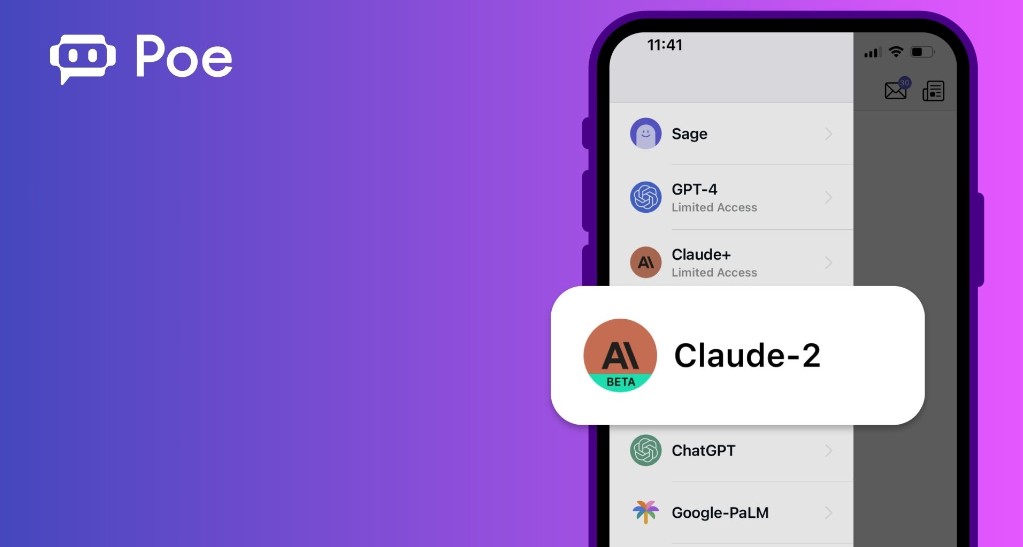
Poe is one of the most established AI aggregators, bringing models from OpenAI, Anthropic, Google, Meta and other providers together in one interface. It also goes well beyond simply providing access to different models, with millions of user-created bots covering everything from writing and coding to specialist tasks and interactive experiences.
This community element is arguably Poe’s biggest strength. You can browse or search its extensive bot library to find specialised assistants rather than building prompts from scratch. Alternatively, you can create your own bots, using custom instructions or API integrations to tailor how they behave.
Poe also covers much more than text. Its selection includes image generators, video models, audio tools and music generators, alongside the major general-purpose LLMs.
Everything operates through Poe’s points system. Free users receive a daily allocation, while paid plans provide substantially more points and access to additional frontier models. This makes it easy to experiment with different models without maintaining separate subscriptions.
For users who enjoy experimenting with AI, Poe’s combination of mainstream models and an enormous community-created ecosystem makes it particularly versatile.
3. Writingmate – Best Browser Extension
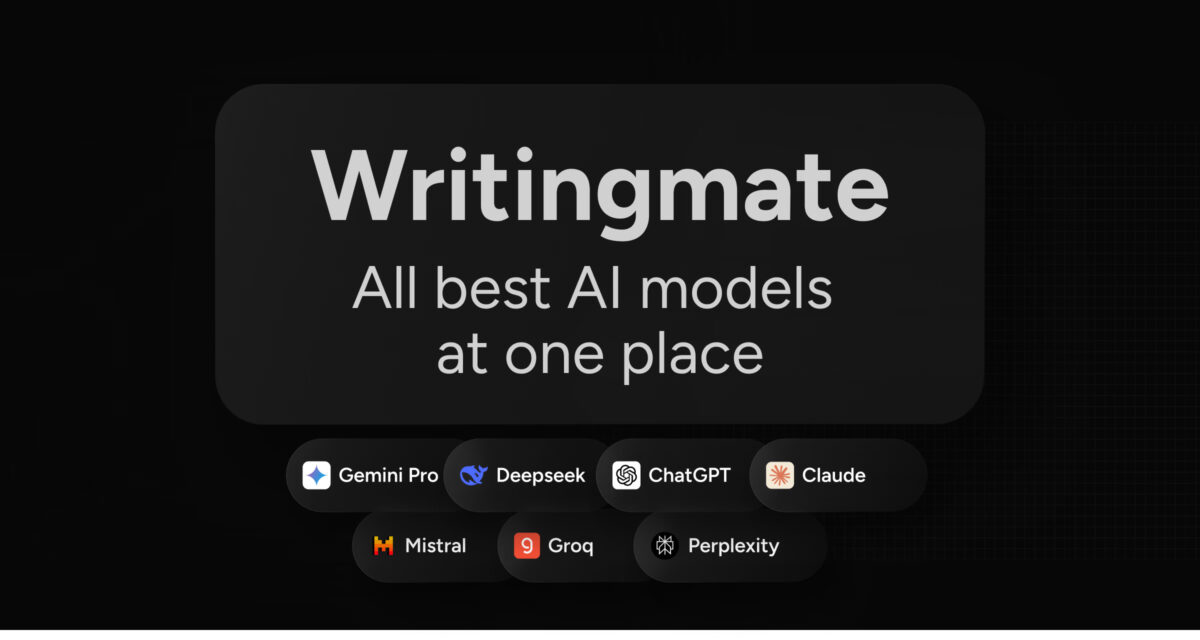
Writingmate’s main advantage is that it brings its AI models and tools directly into your existing browser workflow, rather than making AI assistance something you have to open separately.
It gives you access to leading models including ChatGPT, Claude, Gemini, Grok, DeepSeek and Perplexity, while also providing a range of AI tools for writing, research and everyday productivity.
Its browser extensions for Chrome and other Chromium-based browsers, bring AI assistance into the websites and apps you already use. Rather than copying text into a separate chatbot, you can use Writingmate to work with content directly in your browser. This makes it particularly handy for drafting emails, rewriting text, summarising webpages, researching topics or getting help while working in Google Docs and other web-based applications.
Writingmate also includes dedicated tools for tasks such as AI writing, web search, PDF analysis and image generation, while its multi-model approach means you can choose the AI that best suits the job. You can, for example, use one model for drafting and another to critique or improve the result without paying for both services separately.
It’s therefore a good choice for anyone who wants the flexibility of an AI aggregator without adding another complicated workspace to their routine.
4. Magai – Best for Content Marketers
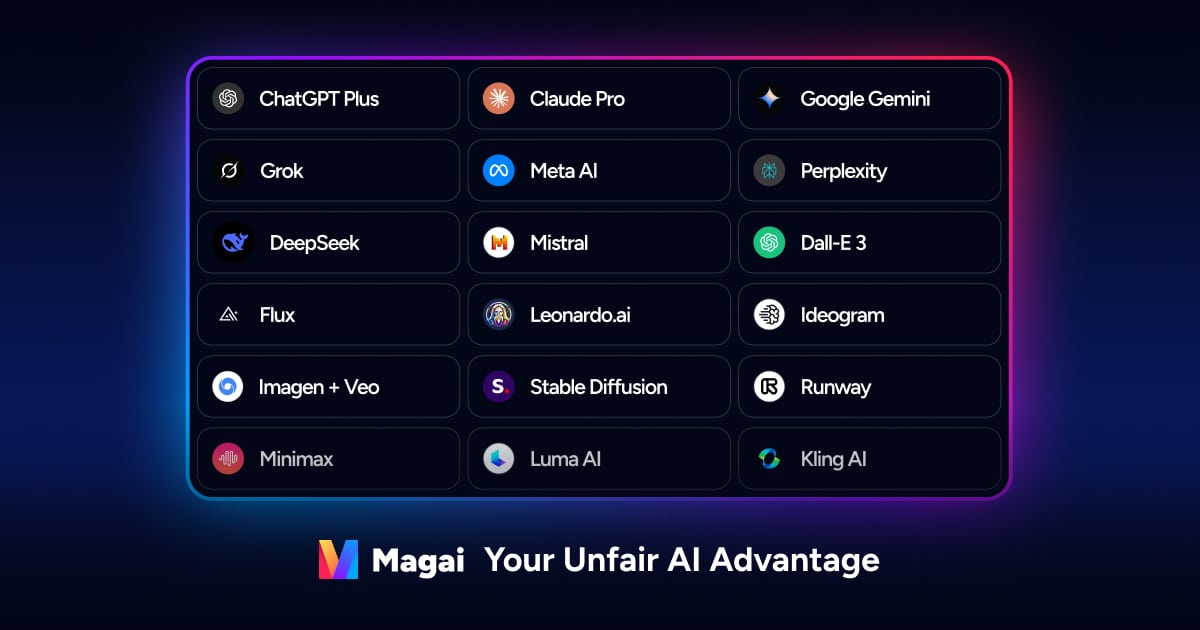
Magai is particularly well suited to content marketers who want AI to become part of their entire production workflow. It brings a large selection of text, image and video models into one workspace, allowing you to choose the best model for everything from brainstorming and research to writing and visual content.
Where Magai really stands out is its Workspaces and custom context. You can create separate spaces for different brands, clients or campaigns, then add brand information, target audiences, style guidelines and reference documents. That context can then be used across conversations, meaning you don’t have to repeatedly explain your brand every time you start a new piece of content.
There are also specialised AI Agents, including an SEO Content Writer and YouTube Expert, while you can create your own for recurring marketing tasks. Saved prompts, chat folders and knowledge files make it easier to standardise repetitive work such as product descriptions, social posts, blog outlines and campaign copy.
For agencies and marketing teams, shared workspaces and permissions add another useful layer, allowing multiple people to work on the same projects while keeping client content separated.
5. HaloMate – Best AI Aggregator Workspace

HaloMate takes the AI aggregator concept and turns it into a proper workspace for longer-running projects. You can switch between GPT, Claude, Gemini, Grok, DeepSeek and other models mid-conversation, or compare their responses side by side when you want a second opinion.
The standout feature is Projects, which gives each piece of work its own persistent workspace. This includes conversations, files, instructions and outputs. You can upload your reference material once and keep building on it, rather than repeatedly attaching the same documents to new chats. Multiple AI “Mates” can also work within a Project, sharing its files and context.
HaloMate’s AI Filesystem takes this further by giving files version control, allowing your AI to search, edit and organise documents while retaining previous versions. There are also dedicated Mates with their own isolated memories, so you can create, for example, a research assistant and a writing assistant without their contexts getting mixed together.
For more ambitious projects, AutoPilot can conduct web and academic research, while Halo Computer gives your Mate a virtual workstation capable of running code, analysing data and creating Office documents. That combination makes HaloMate particularly appealing if you want an aggregator that acts as a central home for ongoing AI-assisted work, rather than just a convenient way to access different models.
6. Mammouth – Best for Image and Video Engines
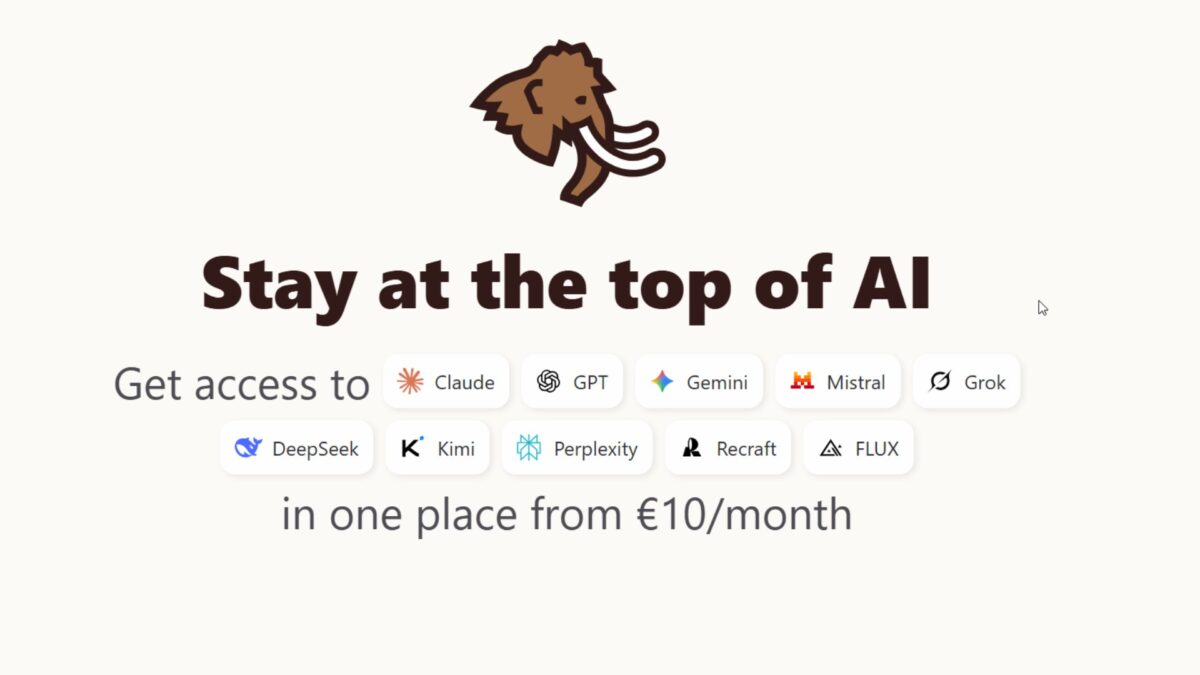
Mammouth is one of the more ambitious AI aggregators, going beyond the usual collection of chatbots to cover text, image and video generation from a single subscription.
You can access models from OpenAI, Anthropic, Google, Mistral, xAI, DeepSeek and others, alongside image generators including GPT Image, Recraft, FLUX and Nano Banana.
Video generation is covered too, with models such as Sora, Veo and Kling available from the same interface.
The model selection is simple. Choose which model you want to use when starting a conversation. Mammouth’s one-click reprompting lets you send the same prompt and conversation context to another model without copying everything into a new chat. This makes it easy to compare outputs or ask a different model to improve an answer.
There’s plenty here beyond generation, too. Mammouth Projects lets you organise chats and documents around ongoing work, while you also get file uploads, voice chat and dictation, AI web search and an agentic mode for more complex tasks.
Recent updates have also added connectors for services including Microsoft 365, GitHub, Notion and Atlassian.
Final Word on the Best AI Aggregators
For most people, Lorka is the best all-round AI aggregator. Its combination of leading models, dedicated AI tools and simple workspace makes it an excellent alternative to juggling multiple subscriptions.
That said, the others have plenty going for them: Poe excels with its huge community of custom bots. Writingmate shines in the browser, and Magai is particularly strong for content marketers. HaloMate offers a powerful project workspace, and Mammouth is hard to beat for image and video generation.
The best choice ultimately depends on which AI models and workflows you use most.


Read our disclosure page to find out how can you help MSPoweruser sustain the editorial team Read more



Improve this guide


User forum
0 messages