
Meta’s new Horizon Studio lets you build VR worlds with prompts


 2 min. read
  Published on
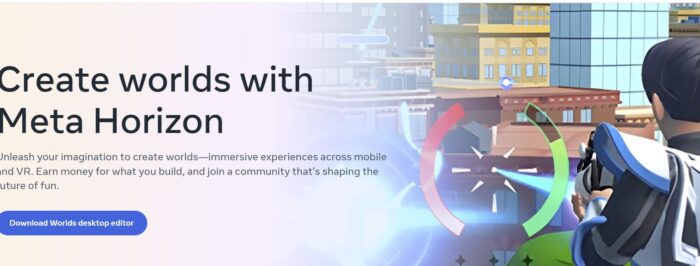
Meta just upgraded Horizon Worlds on three fronts. First, a rebuilt engine promises better graphics and up to 100 concurrent users in a space. Second, Horizon Studio adds AI prompts so creators can sketch out worlds with text instead of hand-placing every object. Third, Hyperscape Capture rolls out in early access, letting Quest 3 owners scan a room and turn it into a navigable VR space in minutes. And there’s a consumer bonus: Horizon TV, a new hub that pulls big-name streaming apps into one place on Quest.
The bet is simple: make creation faster, make worlds fuller, and give people a reason to put the headset on at night. AI-assisted tools help non-developers build more, and a sturdier engine should make those builds look less “VR-starter-kit.” If Studio works as advertised, expect more themed hangouts, branded microsites, and pop-up events that don’t require a Unity pro.
Hyperscape Capture is the stealth unlock. Quick room scans shrink the gap between “I have an idea” and “my friends can walk through it.” For creators, that’s a workflow win; for Meta, it’s seed corn for a bigger universe of places to visit—without paying a studio to build each one.
Horizon TV, meanwhile, leans into co-watching. With apps like Disney+, Hulu, ESPN, Prime Video, Peacock, and Twitch joining the party, Meta is trying to make Quest a living-room stand-in. The question is whether people will actually watch full movies in a headset; 3D titles from studio partners could be the nudge.
There are trade-offs. Better graphics and bigger rooms mean tougher performance constraints on older headsets. AI world-building also needs moderation: powerful prompt tools can churn out IP-adjacent content fast. Meta will have to prove that Studio’s guardrails and reporting keep pace with creation.
If the engine holds up, the cadence matters more than any single feature. Monthly drops—new Studio capabilities, faster loads, better avatars—would keep creators engaged. With Apple playing in premium spatial computing and Meta pushing mainstream price points, Horizon needs to feel alive and improving, not just “another VR app.”
Bottom line: this is Meta building the scaffolding for a busier, more approachable metaverse—fewer barriers to create, more reasons to hang out, and a content hub to keep you there. If creators ship and users stay, the flywheel finally spins.


Read our disclosure page to find out how can you help MSPoweruser sustain the editorial team Read more



Improve this guide


User forum
0 messages