
Ultimate ChatGPT-5 Prompt Guide: 52 Ideas for Any Task


 36 min. read
  Published on
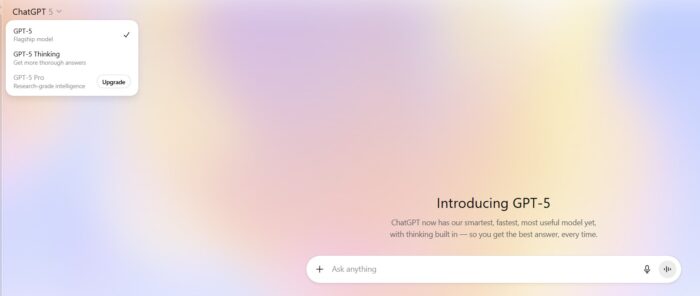
ChatGPT-5 is the latest evolution of AI conversation, boasting advanced reasoning and a huge knowledge base. But to unlock its full potential, you need to craft great prompts. Think of your prompt as a clear brief you give to an expert – the more context and detail you provide, the better the results. In this mammoth guide, we’ll explore the best prompts for ChatGPT-5 across diverse categories – from creative writing to coding and from productivity hacks to philosophical debates. You’ll find practical examples, advanced multi-step prompts, and tips to refine your prompts for optimal outcomes.
How to Craft Effective ChatGPT-5 Prompts (Prompt Engineering 101)
Before diving into examples, let’s cover some prompt engineering best practices that apply to any query with ChatGPT-5:
- Be Clear and Specific: Vague prompts lead to generic answers. Clearly state what you want, including any specifics like style, tone, length, or format. For example, instead of “Write an email,” try “Write a funny 150-word marketing email announcing our 10% off summer sale to existing customers.” Providing those details up front gives ChatGPT the context it needs for a tailored response.
- Provide Context and Details: ChatGPT can only work with what you give it. Outline the situation or background info in your prompt. If you’re asking for a report outline, mention who the audience is and the purpose. The more context you include, the more personalized and relevant the answer will be. For instance, “I work for a healthcare nonprofit; draft an outline for a report on our rural clinic program (audience: local government)” yields a better result than a one-liner request.
- Set a Role or Persona if Helpful: You can ask ChatGPT-5 to role-play as an expert to guide the style of response. Phrases like “You are a friendly history professor…” or “Act as a senior Python developer…” prime the AI to respond from that perspective. For example: “You are an SEO expert. List the most popular long-tail keywords related to [topic].” will yield an SEO-focused answer.
- Specify the Output Format: If you need the answer in a certain structure (bullet list, JSON, outline, etc.), say so. For coding, you might request “Provide the code in one block and then an explanation.” For text, you might say “Summarize in 3 bullet points.” Being explicit about format and length helps ChatGPT hit the mark.
- Use Step-by-Step Prompts for Complex Tasks: ChatGPT-5 has improved reasoning abilities, so don’t hesitate to break down tasks into steps or phases. In fact, prompting the AI to “think step by step” can produce noticeably better results for complex problems. For example, instead of a single question: “How should I launch my product?”, try a multi-step approach: “Let’s plan the product launch step by step. Step 1: Analyze the target market. Step 2: Outline marketing channels. Step 3: Create a timeline. Start with Step 1.” This guides the model through logical stages. You can even instruct the bot to give you one step at a time and wait for your input, creating an interactive planning session.
- Iterate and Refine: Treat the conversation as a dialogue. If the first answer isn’t perfect, clarify or adjust your prompt and ask again. This iterative process is normal – you might say, “Now answer with a more formal tone,” or “Great, can you also include an example in the explanation?” Refining your prompt based on the AI’s last response is often key to getting exactly what you need.
- Ask for Reflection or Alternatives: With ChatGPT-5’s smarter reasoning, you can ask it to critique or improve its answers. Try prompts like “What might I be missing in this plan?” or “Give me three alternative approaches as well.” to explore different angles. This way, you leverage the AI not just for answers, but for critical thinking and variety.
- Mind the Limits (Accuracy and Ethics): Finally, remember that AI can make mistakes or sound confident about wrong info. ChatGPT-5 is more advanced and has fewer hallucinations, but it’s still not infallible. Always double-check factual content and use your judgment, especially for research or business decisions. Think of the AI as a super-smart assistant, not an all-knowing oracle – you’re the editor-in-chief who verifies the output.
With these tips in mind, let’s explore specific prompt examples for each category. Each section below is packed with ready-to-use prompts and ideas, from straightforward queries to advanced multi-step prompts that push ChatGPT-5 to its limits.
Writing Prompts for ChatGPT-5: Unlock Creative & Professional Writing
ChatGPT-5 can be a versatile writing assistant, whether you’re crafting stories, emails, or essays. The key for writing tasks is to state your objective, style, and audience clearly – essentially, give ChatGPT a writer’s brief. You can also ask it to emulate styles (journalistic, academic, Shakespearean, etc.) to match your needs. Here are some of the best writing prompts to try:
- 1. Brainstorm Ideas and Outlines: “I need to write an article about sustainable travel tips. Give me an outline with key points for each section.” – ChatGPT-5 will generate a structured outline, which you can then refine or ask it to expand on each point.
- 2. Generate Creative Content: “Write a short story in the style of a noir detective thriller, where the detective is a cat investigating a missing milk case.” – This prompt specifies genre and tone, letting the model have fun with a creative scenario.
- 3. Rewrite or Improve Text: “Here is a draft paragraph I wrote (insert text). Rewrite this in a more engaging, conversational tone without changing the facts.” – Great for polishing your writing. The AI will maintain the meaning but upgrade the style (you can specify any tone: professional, humorous, dramatic, etc.).
- 4. Emulate a Specific Style or Author: “Act as William Shakespeare and write a sonnet (14 lines of iambic pentameter) about the modern habit of scrolling on smartphones.” – By giving ChatGPT-5 a persona or style, you get a pastiche of that voice. This can work for any famous author or a particular tone (e.g., “Explain quantum physics in the playful style of Dr. Seuss.”).
- 5. Professional Writing Tasks: “You’re an experienced resume writer. Write a concise cover letter for a Software Engineer position at a fintech company, highlighting 5 years of experience in Python and leadership of a project.” – By stating the role (resume writer) and the key details, you’ll get a focused, well-toned cover letter draft. (Tip: always double-check and personalize AI-generated resumes/letters to ensure accuracy.)
- 6. Content Marketing Copy: “Write a funny, engaging product description (150 words) for a new coffee mug that never spills, targeting young professionals. End with a playful call-to-action.” – This prompt includes audience, tone, length, and a unique selling point, which helps ChatGPT-5 produce lively marketing copy tailored to the scenario.
Variation Tip: For any writing prompt, you can add constraints or creative twists. For example, “summarize this story in one sentence,” or “write the above email again, but in pirate speak*.” ChatGPT-5 handles these transformations well, helping you explore many possibilities in style and content.
Coding Prompts for ChatGPT-5: Supercharge Programming Tasks
Whether you’re a developer or just dabbling in code, ChatGPT-5 is like a capable programming buddy. It can explain code, generate functions, debug errors, and even suggest optimizations. To get the best coding help, be very specific about what you need – mention the programming language, the problem, and any requirements or error messages. You can also ask it to take on roles (e.g. “Act as a senior Python developer”) for a more expert tone. Try these prompt examples:
- 1. Code Generation: “Python – Write a function
calculate_tax(income: float) -> floatthat calculates income tax as follows: 10% for income up to $50,000, 20% for any income above $50,000. Include docstrings and comments.” – This clearly states the language, function purpose, parameters, and even style (docstrings/comments), so ChatGPT-5 will produce clean, commented code. Being explicit about logic and structure yields more accurate code. - 2. Debugging Assistance: “I’m getting an error in my JavaScript code: TypeError: undefined is not a function. Here’s the snippet:
(paste code). Find the bug and suggest a fix, explaining what was wrong.” – The model can analyze the snippet, identify likely issues (maybe a misnamed function or wrong element ID), and propose a corrected version with an explanation. This is extremely helpful for tricky bugs. - 3. Code Explanation (Learning a Codebase): “Explain what the following C++ code does, step by step, in simple terms:
(insert code). Focus on the purpose of each function and any tricky logic.” – Great for understanding legacy code or learning from examples. ChatGPT will break down the code’s logic in plain English, effectively acting as a tutor. - 4. Language Translation (Code Conversion): “Convert this Python snippet into Java.
(Python code here)” – The AI will produce equivalent Java code. This is useful for porting algorithms between languages or understanding how a solution might look in another language. (Always test the output, especially for complex conversions!) - 5. Optimization and Best Practices: “Here’s my SQL query (paste query). It works, but it’s slow. Suggest improvements or indexing strategies to optimize it, and explain why.” – ChatGPT-5 can analyze and point out inefficiencies (like missing indexes, subquery issues, etc.), providing a revised query or approach. It’s like having a database expert on call.
- 6. Advanced Multi-step Coding Prompt: “Act as a senior Python developer and help me write a program to analyze log files. Step 1: Outline the program structure with functions needed. Step 2: Provide the implementation for each function in Python. Step 3: Give a brief explanation of how each part works.” – This prompt guides the AI to first produce a plan, then the code, then explanations. Breaking it down ensures the final code is well-structured and you understand it. ChatGPT-5 excels at following such multi-step instructions, essentially doing design, coding, and documentation in one go.
Variation Tip: When coding with ChatGPT-5, don’t hesitate to ask follow-ups. If it gives code, you can say “Great, now optimize this function for readability,” or “Can you also show an example input and output?” The iterative dialogue is powerful for refining code solutions. Always run and test the code it provides, as you would with any coding assistant.
Productivity Prompts for ChatGPT-5: Streamline Your Work & Life
Need a personal assistant or life coach? ChatGPT-5 can help you organize tasks, generate plans, and boost productivity. From managing your schedule to drafting emails, a well-crafted prompt can save you time and keep you organized. The trick is to be clear about your goals and constraints (time, preferences, etc.), so the AI’s suggestions are practical. Here are some prompts to level-up your productivity:
- 1. Daily/Weekly Planning: “I have the following tasks for tomorrow: [list tasks]. Prioritize them and create a realistic schedule from 9 AM to 5 PM, including short breaks. I tend to get tired after lunch, so lighter tasks should go in the afternoon.” – ChatGPT-5 will sort the tasks, perhaps grouping similar ones, and draft a timeline (e.g., 9:00-10:00 Task A, 10:00-10:15 break, etc.). It considers your note about afternoon energy for optimal scheduling.
- 2. Goal Setting and Step-by-Step Plans: “I want to write a 50-page thesis in 3 months. Break this goal into a weekly plan with milestones (research, outline, drafts, revisions). Provide bullet points for each week.” – This prompt yields a week-by-week action plan. ChatGPT might say Week 1: finalize topic and research plan; Week 2-3: literature review, etc., mapping out the path to 50 pages. By dividing the big goal, it helps you stay on track.
- 3. Email and Communication Drafts: “Draft a polite but firm email to my internet service provider about frequent outages. Include: my account info (Jane Doe, #12345), dates of major outages, and request a one-month bill credit as compensation.” – The model will produce a well-worded email that you can refine. It’s specific to the task: polite tone, factual details, and a clear request. No more struggling with how to phrase complaints or tricky emails!
- 4. Brainstorm Life Hacks or Solutions: “I’m always distracted by my phone while studying. Give me 5 practical tips to improve focus and avoid phone distractions, with brief explanations for why each works.” – ChatGPT-5 can act like a productivity coach here. Expect tips like using app blockers, Pomodoro technique, setting a schedule, etc. each with a one-liner explanation (e.g. “Pomodoro: break study time into intervals, which can improve focus”). These bite-sized tips are easy to digest and implement.
- 5. Meal and Budget Planning (Creative Multi-Step): “Create a step-by-step weekly meal plan that’s healthy and budget-friendly for one person. Step 1: suggest 3-4 base ingredients (like chicken, rice, beans) that can be used in multiple meals. Step 2: outline 5 dinners using those ingredients (Mon–Fri), each under $5 per serving. Step 3: provide a simple grocery list.” – In this advanced prompt, ChatGPT-5 will first list base ingredients, then propose specific meal ideas for each night, then give a consolidated grocery list. By explicitly asking for a stepwise solution, you ensure the plan is coherent and reuses items (for efficiency and cost). The result is a thoughtfully curated meal plan that saves both time and money.
- 6. Task Automation Ideas: “I spend 2 hours every day on email triage. Brainstorm some ways to automate or speed up my email management using tools or strategies (like filters, templates, delegation etc.). Provide the suggestions as a numbered list.” – This prompt gets ChatGPT to generate productivity hacks for a specific pain point. You might get suggestions such as setting up filters for newsletters, time-blocking email sessions, using Gmail’s auto-categorization, or even leveraging ChatGPT itself to draft replies. It’s like consulting a productivity guru for free.
Variation Tip: If you want ChatGPT-5 to actually interact step-by-step (for example, planning something collaboratively), you can instruct it to do so. For instance: “Here are my preferences for a weekend trip (beach, budget $500, leaving from NYC). Let’s plan the trip step by step. First, suggest 2 destination options and wait for my choice.” This way, the AI will output a couple of options and pause (implicitly) for you to pick, then you can prompt it again with your choice, and it will proceed. This kind of interactive planning uses ChatGPT-5 as a true assistant, guiding you through decisions one step at a time – a technique that is becoming more common with advanced models.
Learning Prompts for ChatGPT-5: Education & Skill Mastery
ChatGPT-5 can serve as a personal tutor or study buddy across a huge range of subjects. Use it to explain difficult concepts in simple terms, quiz you on material, or help create study plans. The best learning prompts clearly state what you want to learn and how – do you need a simplified explanation, an analogy, practice questions, or step-by-step reasoning? Here are some ways to prompt ChatGPT-5 for learning and education:
- 1. Explain Complex Concepts Simply: “Explain the concept of entropy in thermodynamics in simple terms, as if I’m 12 years old. Use a real-life analogy.” – The model will break down a complex scientific idea into an easy-to-grasp explanation, perhaps comparing entropy to a messy room that tends to get messier. By specifying the target understanding level (12-year-old) and asking for an analogy, you get a digestible answer.
- 2. Socratic Q&A (Critical Thinking): “I want to understand the causes of World War I. Ask me step-by-step questions to guide me to the answer, Socratic method style.” – This advanced prompt makes ChatGPT-5 act like a Socratic tutor. It might start with “What alliances existed before WWI?” and after your answer, follow up with deeper questions. This method helps you actively think and learn, rather than just reading a summary.
- 3. Quiz Generation: “I just studied the French Revolution. Give me a quiz of 5 multiple-choice questions to test my understanding, and then provide the correct answers with brief explanations.” – ChatGPT can produce realistic quiz questions on the fly. After you attempt the quiz, you can even ask it to grade you or explain the ones you got wrong. It’s a handy way to self-test your knowledge on any topic.
- 4. Language Learning and Practice: “You are a Spanish language tutor. Have a simple conversation with me in Spanish about how my day was. Correct my mistakes and suggest better phrases after my response.” – The model will take on the persona of a patient language tutor. It might start with a question in Spanish, wait for your reply (you’d type it), then kindly correct and explain any mistakes. This interactive approach can boost your speaking/writing skills in a new language, with instant feedback.
- 5. Step-by-Step Problem Solving: “Let’s solve a math problem step by step. Problem: Jane has twice as many apples as Tom, and together they have 18 apples. How many does each have? Guide me through the solution one step at a time.” – ChatGPT-5 will likely walk you through defining variables (say, Tom = x, Jane = 2x), setting up the equation x + 2x = 18, solving for x, and interpreting the result. This approach not only gives the answer (Tom has 6, Jane has 12), but also helps you learn how to get there. The chain-of-thought style explanation is especially effective for math and logic problems.
- 6. Customized Study Plan: “I’m studying for the Biology 101 final exam in 4 weeks. Create a study plan that covers all major topics (cell biology, genetics, evolution, ecology), with weekly goals. Also suggest resources or practice activities for each week.” – With this, ChatGPT will outline a week-by-week plan (e.g., Week 1: Cell biology – chapters 1-3, do these practice quizzes; Week 2: Genetics, etc.). It might even suggest resource types like flashcards or lab videos. This structured approach ensures you cover everything systematically before the exam.
Variation Tip: When learning, don’t hesitate to ask ChatGPT-5 to adjust the difficulty or depth. You can say, “Explain it in even simpler terms,” or “Give me a more detailed, technical explanation now,” depending on your comfort level. You can also combine modalities: “Explain this code, and draw an analogy to something in daily life.” This flexibility means you can tailor the teaching style on the fly – something even human tutors might struggle to do! And always remember to verify and cross-reference important info (especially for academic subjects) – ChatGPT’s explanations are usually solid, but it might not cite sources unless you ask, so use it as a starting point for deeper study.
Business Prompts for ChatGPT-5: Plans, Pitches & Professional Insights
In the business realm, ChatGPT-5 can function as a consultant, analyst, or copywriter, helping with everything from strategy brainstorming to writing professional communications. When prompting for business tasks, clarity about your business context (industry, audience, goals) will result in more actionable and relevant outputs. You can also leverage the AI’s ability to analyze and synthesize information – for example, to perform SWOT analyses or come up with marketing ideas. Here are some powerful business-oriented prompts:
- 1. Business Strategy Brainstorm: “I run a small online bakery. Brainstorm 5 strategies to increase sales by 20% in the next quarter. Provide a mix of marketing and product ideas, with a one-line rationale for each.” – ChatGPT-5 might suggest ideas like launching a social media contest (to boost engagement), introducing a seasonal flavor (to attract interest), partnering with local cafes (for new distribution), etc., each with a brief explanation. This prompt gets you a mini consulting session with diverse suggestions.
- 2. Marketing Copy & Content: “Act as a social media marketing expert for a moment. Write a 100-word Instagram post announcing our new vegan protein shake, targeting fitness enthusiasts. The tone should be energetic and use a couple of popular fitness hashtags.” – By specifying the expert role and the specifics of the task (platform, length, audience, tone), you’ll get a punchy Instagram-ready blurb. The output could include a call-to-action and hashtags, perfectly tailored for the fitness crowd.
- 3. SWOT or Market Analysis: “We’re planning to launch a product in the electric scooter market in Europe. Give me a brief SWOT analysis (Strengths, Weaknesses, Opportunities, Threats) for entering this market as a new company.” – ChatGPT-5 can compile a SWOT analysis drawing on general knowledge: Strengths (e.g., growing demand for eco-friendly transport), Weaknesses (limited brand recognition), Opportunities (urbanization, government incentives), Threats (established competitors, regulatory changes). This is a high-level analysis that you can further refine with real data.
- 4. Email and Memo Drafting: “You are a Human Resources manager. Draft an internal memo to employees announcing a return-to-office hybrid schedule. Be positive and reassuring, and include key dates and instructions for the new policy.” – This prompt sets the persona and scenario. The AI might produce a well-structured memo with greeting, context, new policy details, and an encouraging closing note. Adopting the HR manager role helps ensure the tone is appropriate and addresses employee concerns.
- 5. Financial Analysis or Report Summary: “I have this quarterly report for our retail business (summarize key data: sales up 5%, foot traffic steady, online orders up 20%, etc.). Summarize these results in a short paragraph suitable for an investor update, and suggest one possible reason for the increase in online orders.” – ChatGPT-5 will turn raw data into a coherent narrative, e.g., “Our Q3 results were strong, with overall sales rising 5%. Notably, online orders grew 20%, likely due to the new website launch and holiday promotions, while store foot traffic remained steady. …” and so on. It will also provide a plausible insight (reason for online growth) based on the context given.
- 6. Business Writing (Proposals, Plans): “Outline a one-page business proposal for a partnership between my event planning company and a local catering business. Include: introduction of each business, the mutual benefits of partnering, and a call-to-action to proceed.” – From this prompt, expect a structured outline or even drafted sections for the one-pager. ChatGPT might write an intro like “XYZ Events is a premier event planner… ABC Catering is a renowned local caterer… Together, we can… etc.” highlighting how the partnership could increase client reach, improve service offerings, and so on, ending with next steps. This gives you a solid draft to build on.
Variation Tip: Leverage ChatGPT-5 as a role-specific expert for business prompts. You can preface queries with “Act as a financial advisor…,” “You are a business coach…,” or “Think like a market research analyst…” depending on what you need. This often yields more targeted and insightful responses. For example, “Think like a customer support manager: how can we improve our customer service response times?” might result in very practical, department-focused advice. And as always in business, use the AI’s output as a starting draft or brainstorming aid – you’ll want to infuse real data and personal judgment before making final decisions or public communications.
Strategy Prompts for ChatGPT-5: Planning & Decision-Making Mastery
Strategic thinking is all about seeing the big picture and evaluating options – something ChatGPT-5’s reasoning upgrades can assist with. You can use prompts in this category to simulate scenarios, analyze choices, and create structured plans. A big advantage of ChatGPT-5 is its ability to handle multi-step reasoning without getting confused, especially if you explicitly prompt it to do so. Here’s how to get strategic help from the AI:
- 1. Decision Matrix Analysis: “I’m deciding between launching Product A vs. Product B next. Compare these two options considering factors: development cost, market demand, competition, and profit potential. Provide a brief analysis of each factor for both options and conclude with a recommendation.” – The model will likely produce a comparison (perhaps even formatted as bullets or a table if asked) discussing each factor. For example, Product A: high development cost, high demand, moderate competition, high profit potential; Product B: low development cost, lower demand, low competition, moderate profit. Finally, a recommendation might be given (e.g., “Product A could yield more profit if we can invest upfront, but Product B is safer and cheaper to launch”). This kind of structured breakdown is incredibly useful for complex decisions.
- 2. Step-by-Step Strategy Development: “Help me develop a marketing strategy for a new cafe. Step 1: identify target customer segments and their needs. Step 2: suggest marketing channels (with reasoning) to reach them. Step 3: propose a promotion or event for the grand opening. Go step by step.” – By splitting into steps, you guide ChatGPT-5 to first produce a clear segmentation (e.g., office workers looking for quick coffee, local remote workers seeking space, etc.), then match channels to each segment (social media for younger crowd, local flyers for nearby offices, etc.), and finally a creative promotion idea (like a free coffee day or loyalty card launch). The advice will feel like a mini marketing plan, with logical flow from one step to the next.
- 3. Scenario Planning (What-If Analysis): “Scenario: If our main supplier suddenly doubles their prices, what are 3 strategies we could pursue to maintain our profit margins? Provide pros and cons for each strategy.” – ChatGPT-5 can engage in hypothetical thinking here. It might suggest (1) finding alternative suppliers (pro: lower cost, con: quality unknown), (2) passing some cost to customers via slight price increase (pro: maintain margin, con: risk losing customers), (3) optimizing internal costs/efficiency to absorb the increase (pro: no price change, con: might not fully cover extra cost). Listing pros and cons helps in evaluating which path to take. This is essentially a contingency plan brainstorm – very handy for stress-testing your business strategies.
- 4. Competitive Analysis (Strategy Lens): “Act as a strategy consultant. We’re a new ride-sharing app entering the market against Uber and Lyft. What niche or differentiation strategy should we focus on to compete effectively? Provide a specific suggestion and why it could work.” – Here the AI, thinking like a strategist, might propose something like “focus on underserved small cities/towns” or “position as a premium service with safety and comfort features”, backed by reasoning (e.g., less competition in small cities, or a segment of customers willing to pay more for better service). By explicitly requesting a differentiated strategy, you avoid generic advice and get something you can actually build a plan around.
- 5. Collaborative Planning Prompt (Advanced): “I have a goal to increase our e-commerce site’s conversion rate by 30%. Let’s work on a strategy together, step by step. I’ll share details and you help me plan. First, identify 2-3 key areas that influence conversion rate (like website design, pricing, etc.) and wait for my input.” – This interactive prompt sets up a collaboration. ChatGPT-5 might respond with: “Key areas affecting conversion: 1) Website user experience (page load, checkout process), 2) Trust signals (reviews, security badges), 3) Pricing/promotions. Which of these do you want to focus on first?” This invites you to pick an area, then you can say “Let’s focus on user experience,” and the AI will dive deeper. Essentially, you’re using ChatGPT-5 as a facilitator for strategic planning, prompting you for decisions at each branch. This approach reflects how prompting is evolving – it’s not just Q&A, but an interactive “workshop” with your AI partner. The result is a thought-through strategy that you co-created with the AI.
Variation Tip: For strategy work, consider using frameworks in your prompts – ChatGPT knows many business frameworks and can apply them if asked. For example, you can say, “Use Porter’s Five Forces to analyze our position in the industry” or “Draft a basic Project Plan (with timelines and owners) for implementing this strategy”. Also, feel free to ask “Why” and “How” questions, not just “What.” For instance, “Why would Strategy X be better than Strategy Y in a recession?” to probe the model’s reasoning. ChatGPT-5, with its improved reasoning, often provides insightful answers to these deeper questions. As always, treat strategic outputs as brainstorming or first drafts – they’re a great sounding board, but you’ll want to refine and validate before executing any big moves.
Philosophy Prompts for ChatGPT-5: Deep Discussions & Thought Experiments
One of the most fascinating uses of ChatGPT-5 is engaging in philosophical discussions or exploring thought-provoking questions. The model can draw from a wide range of philosophical ideas and figures, helping you examine different perspectives on age-old questions or modern dilemmas. To get the most out of it, clearly state the question or scenario you want to explore, and consider asking it to argue from a certain standpoint or to compare viewpoints. Here are some prompts to spark profound conversations with ChatGPT-5:
- 1. Explore a Big Question: “Is there such a thing as absolute moral truth? Provide an analysis of this question, mentioning perspectives from different philosophies (e.g., moral absolutism vs. relativism) and conclude with your own reasoned stance.” – The AI will likely outline how some philosophies (maybe Kantian ethics or certain religious moral codes) argue for absolute truths, while others (like utilitarianism or cultural relativism) suggest morality depends on context. It will then try to weigh these perspectives and give a balanced conclusion. This is a great way to get a quick overview of a complex question, almost like a mini-essay.
- 2. Philosophical Debate or Dialogue: “Let’s have a debate. You take the position that artificial intelligence can be truly conscious, and I’ll take the skeptic’s position. Present your opening argument.” – ChatGPT-5 can simulate a debate partner. It might start with arguments about what consciousness entails and examples of AI improvements. You can then respond with your counterargument, and even ask it to rebut you. This back-and-forth can sharpen your understanding of both sides of the issue (just remember which side the AI is arguing – you asked it to take the pro-AI-consciousness side in this case!).
- 3. Role-Play a Philosopher: “Act as the philosopher Aristotle. I will ask you about the concept of happiness. Explain happiness according to Aristotle’s philosophy, and feel free to use references to his works (like Nicomachean Ethics).” – In this prompt, ChatGPT-5 will respond in a manner similar to how Aristotle might (in modern English, but with that perspective). You’d likely get an explanation of eudaimonia (flourishing) and the idea of virtue and the Golden Mean. This is a fun way to learn philosophy by “interviewing” great thinkers. You could do this with any philosopher: Kant on duty, Nietzsche on power, Buddha on suffering, etc. The accuracy is generally good, but it’s wise to fact-check if you’re using it for serious study.
- 4. Socratic Method on Personal Beliefs: “I’m going to state a belief: ‘Money can’t buy happiness.’ Challenge me with Socratic questions that make me examine this belief from different angles.” – ChatGPT-5 will ask probing questions like “What do you define as happiness?”, “Can money buy things that make you happy, or experiences that lead to happiness?”, “Do we know of people who are wealthy and unhappy (or vice versa)? What does that suggest?”. Answer each question yourself, and the AI will continue to follow up. This method helps you critically analyze your own stance by uncovering assumptions or counterexamples.
- 5. Thought Experiment: “Imagine a teleporter that creates an exact copy of you on Mars and destroys the Earth original in the process. From a philosophical standpoint, is the person on Mars still ‘you’? Discuss this identity puzzle, referencing thought experiments or philosophies of identity (like John Locke’s or Derek Parfit’s views).” – This prompt plunges into the classic teleportation paradox in philosophy of identity and mind. ChatGPT-5 might reference continuity of consciousness, Locke’s memory-based identity criterion, or Parfit’s idea that identity is not what matters – all in one answer. It will explore whether the Mars copy is you, an identical twin, or something in between. Thought experiments like the Ship of Theseus, the Trolley Problem, brain-in-a-vat, etc., are all fair game for ChatGPT – you can get a rich discussion on any of these by simply describing the scenario and asking for an analysis.
Variation Tip: For philosophical prompts, consider specifying the format: essay, dialogue, list of points, etc. For instance, “Give me 3 arguments for and 3 against the concept of free will.” This will produce a clear pro/con list. Or “Explain Nietzsche’s concept of the Übermensch in a single paragraph.” Also, you can mix philosophy with creativity: “Compose a short dialogue between Plato and Darwin discussing the value of empirical evidence.” ChatGPT-5 can produce surprisingly coherent and insightful imaginary conversations! One more thing: since philosophy often has no right answer, feel free to ask “What do you think?” at the end of a discussion. ChatGPT-5 can then provide a reasoned personal conclusion (based on its training) – essentially an AI’s perspective, which can be interesting in itself.
Creativity Prompts for ChatGPT-5: Unleashing Imagination and Innovation
One of the most fun applications of ChatGPT-5 is using it as a creative companion. It can help generate original ideas, stories, poems, or even whimsical scenarios to spark your imagination. The key is to give it some inspiration or constraints, then let it run wild – or even collaborate with it by building on its ideas. Here are some prompts to supercharge creativity:
- 1. Idea Generation (Brainstorming): “I need fresh ideas for a YouTube video series about basic science experiments for kids. Brainstorm 10 fun episode ideas with catchy titles.” – ChatGPT-5 will list ideas like “Magic Milk Colors – The Science of Surface Tension,” “Balloon Rocket Cars – Newton’s Third Law in Action,” etc., each likely with a short descriptive title. This is great for breaking past creator’s block – whether you need ideas for content, projects, startup pitches, or even birthday party themes, the AI can spit out a bunch of options in seconds.
- 2. Random Combination (Creativity Exercise): “Combine two random things – say, a smartphone and a medieval castle – into a creative concept or story premise.” – This prompt pushes the model into unusual territory, which often yields novel ideas. It might come up with a story about a medieval castle that’s actually a giant smartphone in disguise, or a time-traveler knight who ends up inside a smartphone game. The more bizarre the combination, the more you (and the AI) get to flex creative muscles.
- 3. Character and World-Building: “Create a new superhero character for a comic. The twist: their power is related to music and they live in a city floating in the sky. Describe their origin story, powers, and a key challenge they face.” – ChatGPT-5 will happily invent a superhero (maybe “Sky Serenade” who can control weather with violin music, born in a city of clouds, etc.). It’ll outline the character’s story and even some plot hooks. This is perfect for writers or game masters looking for a burst of inspiration to build on.
- 4. Creative Writing Prompt: “Write a poem about time passing, but use the metaphor of a river. It should be in free verse, about 8 lines.” – The AI will produce a poetic piece using the river as a metaphor for time, likely with imagery of flowing water, changing currents, etc. You can specify any style (haiku, sonnet, limerick) or leave it open. You can also ask for song lyrics, witty limericks about a topic, or a heartfelt letter from the perspective of, say, your pet – the possibilities are endless.
- 5. Imaginative Role-Play: “Pretend you are an alien explorer observing human life for the first time. Describe a common human activity (like going to a coffee shop or taking a selfie) from an alien perspective, and make it amusing.” – This prompt flips the perspective and results in creative, often humorous content. For example, an alien describing a coffee shop might say “humans eagerly line up to drink a hot bitter liquid that makes them vibrate faster.” This kind of role-play can be both entertaining and insightful (great for writing satire or just a laugh).
- 6. Design Inspiration: “I’m designing a fantasy city for a novel. Give me 3 imaginative concepts for this city’s theme and layout. For each concept, describe the city’s key features and atmosphere. (e.g., a city built in giant trees, a city floating on the ocean, etc.)” – ChatGPT-5 will come up with creative city concepts like a treetop city with rope bridges and bioluminescent plants, or a floating ocean city on interconnected ships and platforms. This can really kickstart your world-building with rich details that you might not have thought of.
Variation Tip: If you want to push creative boundaries, try using constraints as challenges. For example, “Tell a story about a detective and a dragon in exactly 50 words,” or “Write a sentence that uses every letter of the alphabet at least once (a pangram).” ChatGPT-5 can attempt these playful constraints. Another idea: do a collaborative story, where you and ChatGPT take turns writing sentences or paragraphs. Just prompt it with “Continue the story: [your starting line]…” and keep alternating. The key with creativity prompts is to have fun and not be afraid to try the weird or absurd – the results might surprise you!
Research Prompts for ChatGPT-5: Analysis, Summaries & Academic Aid
ChatGPT-5 is an invaluable tool for research-related tasks. It can summarize complex material, help outline your papers, suggest methodologies, and analyze data or arguments. While it doesn’t replace rigorous research work, it can accelerate your workflow and offer insights. When using ChatGPT-5 for research, make sure to provide it with the relevant information (or ask it to assume certain data) and to always double-check its outputs for accuracy. Here are some ways to employ ChatGPT-5 in research and academic contexts:
- 1. Summarizing Articles or Papers: “Summarize the key findings of the attached research article on climate change impacts on agriculture. Write the summary in 2-3 paragraphs, focusing on results and conclusions (ignore the methods).” – Paste in the article (if it’s not too long for the context limit) or a long excerpt. ChatGPT-5 will generate a concise summary, highlighting main points like “rising temperatures reduce crop yields by X%” or “farmers are adapting by doing Y.” This is a huge time-saver for literature reviews. For very long documents, you can ask for a summary of each section, or use a multi-step approach: have it summarize section by section, then ask it to combine those into a higher-level summary.
- 2. Extracting Information: “From the text of this interview transcript (pasted), extract 5 key insights or quotes about the effects of remote work on employee productivity.” – This prompt asks for specific nuggets. ChatGPT will sift through the transcript and pull out salient points or memorable quotes, acting like a smart highlighter. It’s extremely useful when you have a large chunk of qualitative data (like interview or focus group transcripts) and you need the main takeaways.
- 3. Research Planning (Methodology): “I’m working on a research project in psychology to study effects of sleep deprivation on decision-making. Suggest a suitable research method and design for this study (e.g., experiment, survey), and explain your choice. Also, list two potential challenges and how to address them.” – The AI might recommend a controlled experiment (e.g., one group gets no sleep, one gets normal sleep, then both take decision-making tests), justifying that this method can establish causation. It may mention challenges like ethical concerns of sleep deprivation and participant performance variability, with solutions for each. This is akin to asking a knowledgeable colleague for advice on study design.
- 4. Data Analysis Explanation: “Explain what a t-test is and when you would use it in research. Provide an example in simple terms.” – ChatGPT-5 will describe that a t-test compares means between two groups and is used to see if differences are statistically significant, etc., possibly followed by an example like comparing test scores of students who slept vs. didn’t sleep before an exam. This is great for quickly clarifying statistical concepts, analysis techniques, or even interpreting results. You could also prompt: “We got a correlation of r=0.5 in our study – explain what that means in context, to a non-expert audience.” and it would translate the stats into plain language.
- 5. Outlining and Writing Aids: “Based on this research topic, generate an outline for a research paper in standard IMRaD format (Introduction, Methods, Results, Discussion). The topic is: [Your topic]. Include one or two bullet points of what to cover in each section.” – The model will create a structured outline: Introduction (background on topic, gap in literature, hypothesis), Methods (who/what/how you’ll study), Results (the kind of data expected or how it’ll be presented), Discussion (interpretation, implications, limitations). This can serve as a starting template for your paper. Similarly, you can ask for help writing specific sections: “Draft a 200-word abstract for the above outline” or “What could be a strong concluding sentence for the discussion section highlighting the significance of findings?”. Just remember that AI is not aware of actual new data you gathered unless you tell it, so keep it grounded in the info you have.
- 6. Checking for Gaps or Improvements: “Here’s my brief research summary: [paste yours]. Please review it for clarity and logical flow, and suggest any points that need elaboration or evidence.” – ChatGPT-5 can act as a reviewer, pointing out if something was unclear or if a term wasn’t defined, maybe suggesting you add a statistic here or a citation there. It’s like a second set of eyes on your draft. Of course, it’s not a specialist, but it’s quite good at catching general coherence issues or asking questions a reader might ask.
Variation Tip: When using ChatGPT-5 for research assistance, cite sources and double-check facts. You can even ask it: “Give me 3 references (with URLs if possible) that support the point that [X].” Sometimes it can provide references, though you should verify them (and be aware of the knowledge cutoff if it’s not browsing – ChatGPT-5 might have updated info if allowed to browse). Also, consider using it to generate examples or analogies to better explain your research to others: “Give an analogy to explain our findings on network security to a layperson (maybe like a home safety analogy).” This can yield creative ways to communicate complex ideas. In all cases, think of ChatGPT-5 as an eager research assistant: great for drafts and ideas, but it’s up to you to refine, fact-check, and finalize the work for academic rigor.
Using the prompts and tips in this guide, you can collaborate with ChatGPT-5 as a powerful assistant in writing, coding, learning, business, and beyond. The key is to remember that how you ask matters – clear, detailed prompts will unlock more of the AI’s capabilities. With practice, you’ll get a feel for phrasing requests to get exactly what you need. ChatGPT-5 is advanced (and getting smarter), but your guidance steers its output.
Armed with these example prompts and strategies, you’re ready to explore the limits of what ChatGPT-5 can do. Whether you’re drafting an email, debugging code, or pondering the meaning of life, try out these prompts (and tweak them to fit your context). You’ll often be surprised by the quality, creativity, and depth of the responses. Happy prompting, and may your conversations with AI be fruitful and fun!


Read our disclosure page to find out how can you help MSPoweruser sustain the editorial team Read more



Improve this guide
User forum
0 messages